
ThriftFlip Resell Tycoon Build Your Clothing Store
Turn cleaned thrift finds into a shop customers actually walk into and buy from.
Why the store matters
Thrift flips pay, but a clothing store is how Thrift&Flip: Resell Tycoon turns you from a scavenger into an operator. MEGANIUS STUDIOS calls out building a store and watching customers walk in as a core pillar beside thrift hunting, cleaning, garage bids, workers, and market trends. A good store sells while you are across the map chasing sneakers or bidding a storage unit.
This guide covers foundation goals, display logic, customer flow, stocking rules, and when to expand. Pair it with Clean and Sell, Make Money, and later Hire Workers.
Prerequisites before you spend on retail
Do not empty your Cash on empty square footage. Before major store spend:
- Complete several find → clean → sell cycles (Getting Started).
- Hold a Cash buffer for thrift restocks and at least one modest garage attempt.
- Own cleaned inventory worth displaying — dirty stock on mannequins teaches the wrong habit.
- Know today’s hot categories from market trends so opening displays match demand.
If those four are true, store Cash is an investment. If not, you are decorating a warehouse.
First build priorities
Clear customer path
Customers need an obvious entrance, aisle, and browse loop. Avoid maze layouts on day one. Wide, readable paths beat clever clutter. Put high-interest pieces where traffic naturally slows — near the entrance sightline and along the main aisle.
Displays that sell the story
Group by category when possible: sneakers together, bags together, apparel blocks. Mixed junk piles make rarities harder to notice and make your shop feel like the thrift store you already looted. Rotate displays when trends shift so the floor matches what buyers want now.
Stock depth over footprint
A smaller shop packed with cleaned, on-trend items outperforms a huge empty shell. Expand walls after shelves stay full through a full hunt cycle.
Stocking workflow
- Thrift or win garage contents.
- Clean everything destined for retail.
- Sort: store-bound vs instant-flip vs hold-for-trend.
- Place store-bound items on displays with rarity and trend in mind.
- Leave the shop only when at least one strong display row is complete.
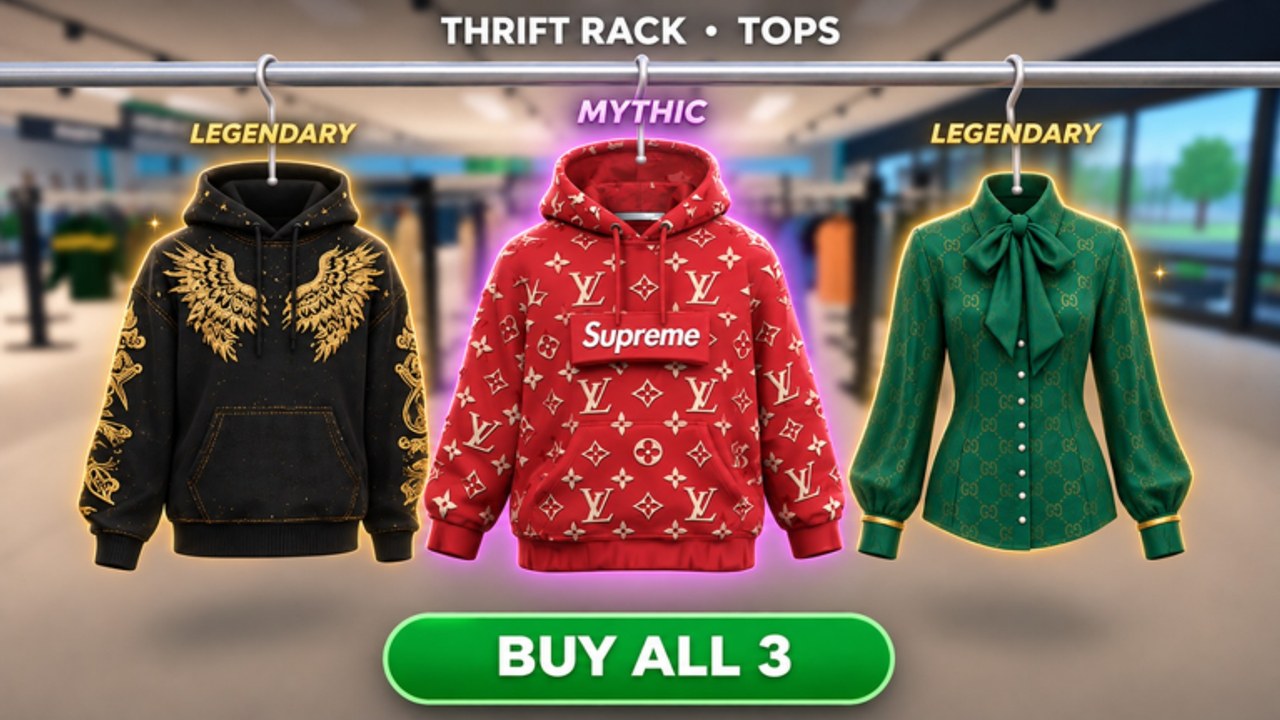
Mythic and high rarities deserve hero placement, but do not leave the rest of the store barren. Mid-tier cleaned fillers keep average customers buying while collectors stare at the hero piece. Rarity context: Item Rarity.
Customers and conversion
You cannot force a purchase, but you can remove friction:
- Keep aisles walkable on busy 10-player servers so NPCs and players are not stuck.
- Restock sold-out displays instead of AFK-posing next to empty stands.
- Match price expectations to trends; overpricing cold categories stalls traffic perception even if the model is more complex under the hood.
- Revisit the shop after every major haul — abandoned stores go quiet.
When sales happen while you thrift, you have achieved the store’s real purpose: parallel income.
Upgrades that usually pay
Exact upgrade names can shift with patches, so buy in this spirit:
- Display capacity — more cleaned items visible
- Presentation / attractiveness — helps the shop read as a real retailer
- Storage adjacency — faster restocks from inventory
- Footprint expansion — only after capacity is consistently full
Skip vanity expansions that do not increase sellable faces or customer comfort.
Syncing store strategy with the rest of the loop
- Trends: Rebuild a focal display when the market pivots (Make Money, Best Flips).
- Garages: After a win, clean and route the best pieces to hero displays the same session (Storage Garages).
- Workers: Hire when restocking and tending steal too much hunt time (Hire Workers).
- Codes: Cash from Resell2000 can fund an early display push — still leave thrift capital.
Co-op store tips
On shared servers, friends can specialize: one hunts, one cleans, one tends displays. Call out when a Mythic hits the floor so the attendant prices and places it correctly. Do not steal a teammate’s staged display item to flip privately unless your group agrees.
Failure modes
- Empty luxury shell — big room, no stock.
- Dirty displays — undercuts the whole brand fantasy.
- All Mythic, no fillers — browsers bounce when only one item exists.
- Never visiting the shop — you built a prop, not a business.
- Expanding after every sale — footprint creep without inventory depth.
Session checklist for store owners
- Entrance and aisle clear
- At least one on-trend display fully stocked with cleaned items
- Hero rarity placed where it is visible
- Cold stock discounted or held off main sightlines
- Cash reserved for thrift restock after any upgrade purchase
- Plan for who tends the shop if you leave to bid
Progress milestones
Milestone A: First customer purchases from your displays while you are present.
Milestone B: Sales occur while you are thrifting or in a garage auction.
Milestone C: Workers keep the floor alive without you micromanaging every sale.
Milestone D: Store plus thrift plus selective garages fund continuous upgrades without bankruptcy spirals.
Hit A and B before obsessing over C and D.
Related pages
- Hire Workers
- Clean and Sell
- Make Money
- Getting Started
- Tools Hub — inventory habits that keep shelves honest
- Updates Hub — patch notes that change store economics
Frequently Asked Questions
Quick answers for thrift flips, codes, and store growth.
When should I build my clothing store?
After you can fill displays with cleaned inventory and still keep Cash for thrift restocks. Empty stores do not generate reliable sales.
How should I arrange displays?
Use a clear customer path, group categories, put high rarities on hero sightlines, and rotate stock when market trends change.
Do I need Mythic items before opening?
No. Cleaned on-trend mid-tier stock is enough to start. Add Mythics as hero pieces when you find them.
Should I expand the store early?
Expand after current displays stay full. Capacity and presentation upgrades usually beat empty square footage.
How do workers relate to the store?
Workers help once sales and stock are consistent. Build the shop and stocking habits first, then automate with hiring.